

-
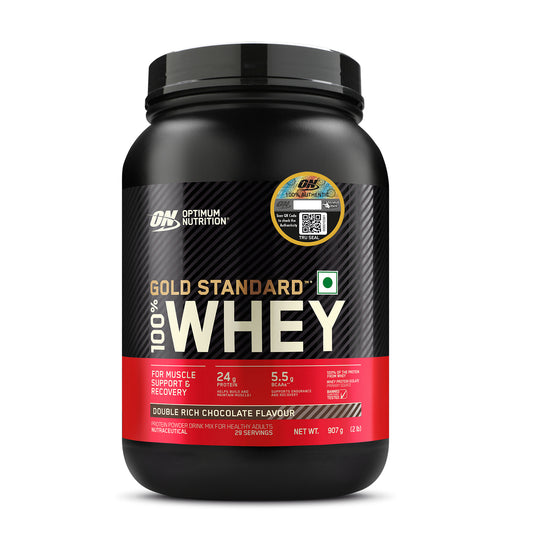
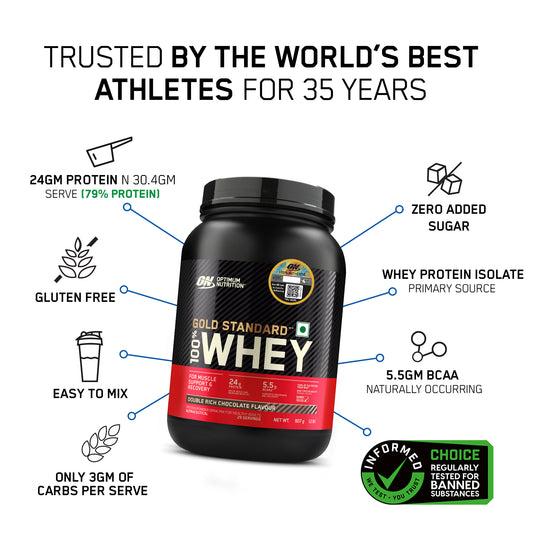
Gold Standard 100% Whey Protein | 907 g (2 lbs) | Double Rich Chocolate
Regular price ₹ 4,629Regular priceMRP₹ 5,079Sale price ₹ 4,629 9% OFFInclusive of all taxesUnit price per4 FlavoursSale -
FREE GIFT
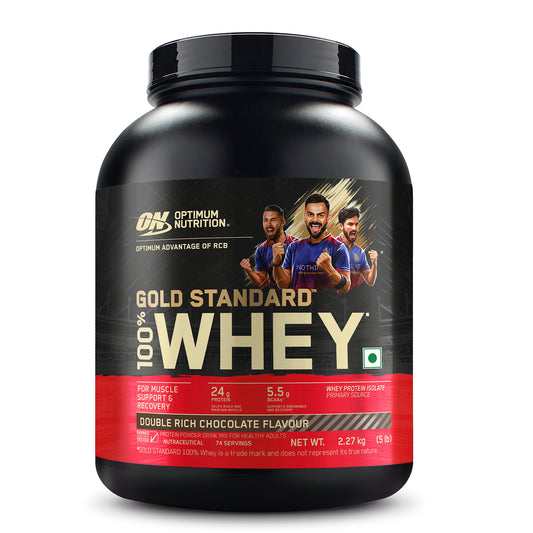
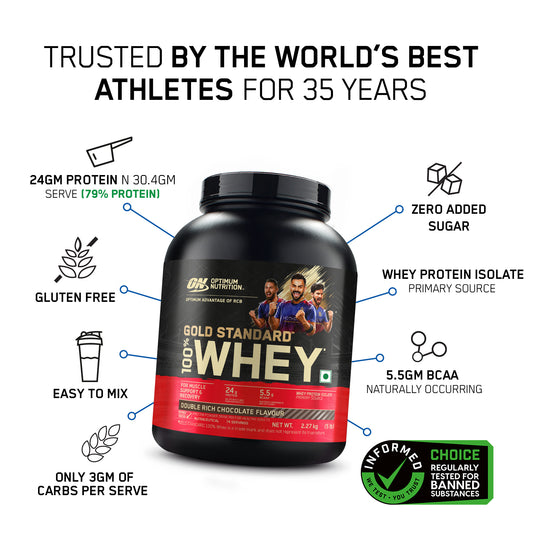
Gold Standard 100% Whey Protein Powder | Double Rich Chocolate | 5 lbs
Regular price ₹ 10,599Regular priceMRP₹ 11,329Sale price ₹ 10,599 6% OFFInclusive of all taxesUnit price per3 FlavoursSale -


Gold Standard 100% Whey Protein Powder | Double Rich Chocolate | 1 lbs
Regular price ₹ 2,499Regular priceMRP₹ 2,759Sale price ₹ 2,499 9% OFFInclusive of all taxesUnit price per2 FlavoursSale -
FREE GIFT


Gold Standard 100% Whey Protein Powder | Double Rich Chocolate | 4 kg
Regular price ₹ 17,649Regular priceMRP₹ 18,929Sale price ₹ 17,649 7% OFFInclusive of all taxesUnit price per2 FlavoursSale -

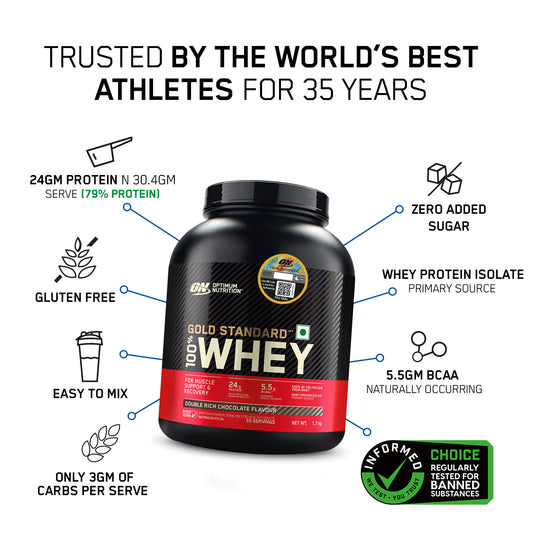
Gold Standard 100% Whey Protein Powder | Double Rich Chocolate | 1.7 kg
Regular price ₹ 7,999Regular priceMRP₹ 11,049Sale price ₹ 7,999 28% OFFInclusive of all taxesUnit price per1 FlavourSale -

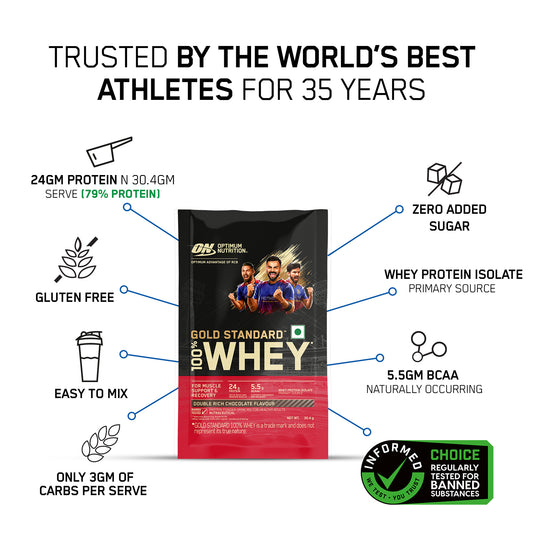
Gold Standard 100% Whey Protein Powder | Double Rich Chocolate | 152 g
Regular price ₹ 999Regular priceMRP₹ 1,349Sale price ₹ 999 26% OFFInclusive of all taxesUnit price per3 FlavoursSale -
NEW


Performance Whey Protein Powder 1Kg (Chocolate Milkshake)
Regular price ₹ 3,499Regular priceMRP₹ 5,249Sale price ₹ 3,499 33% OFFInclusive of all taxesUnit price per1 FlavourSale -
NEW

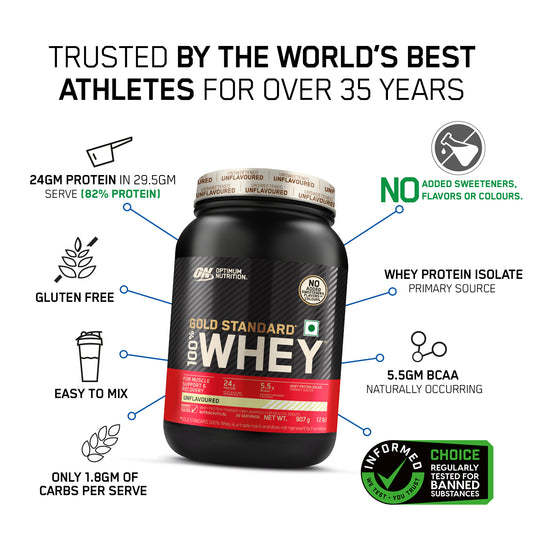
Unflavoured Optimum Nutrition (ON) Gold Standard 100% Whey Protein Powder - 2 lb, 907 g
Regular price ₹ 5,349Regular priceMRP₹ 5,749Sale price ₹ 5,349 7% OFFInclusive of all taxesUnit price per4 FlavoursSale -

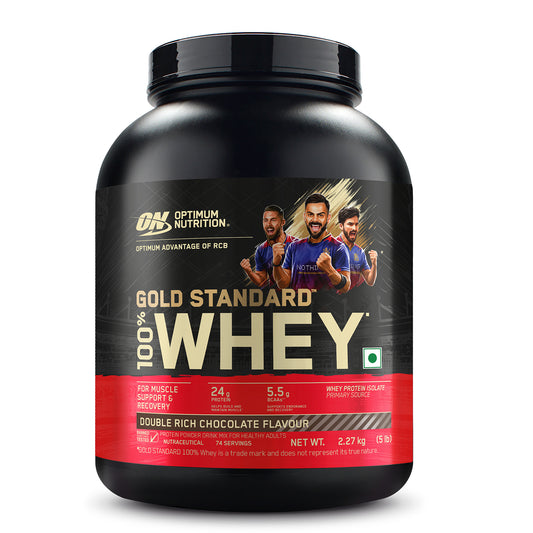
Gold Standard 100% Whey 5 Lbs Double Rich Chocolate + Pre Workout Green Apple
Regular price ₹ 10,799Regular priceMRP₹ 12,258Sale price ₹ 10,799 12% OFFInclusive of all taxesUnit price per1 FlavourSale -

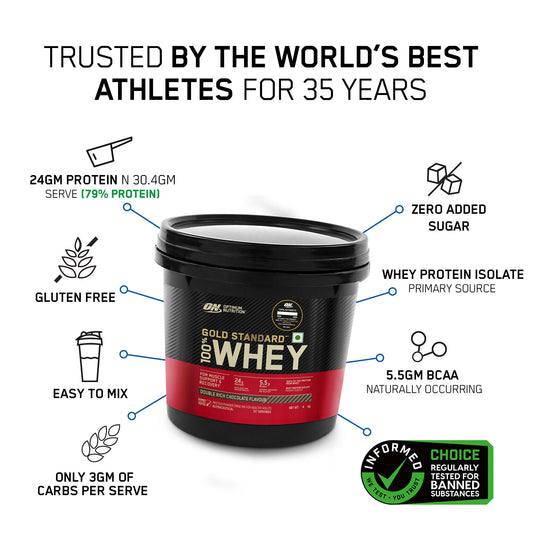
Gold Standard 100% Whey 4 KG Double Rich Chocolate + Pre Workout Green Apple
Regular price ₹ 17,649Regular priceMRP₹ 19,858Sale price ₹ 17,649 11% OFFInclusive of all taxesUnit price per1 FlavourSale -
NEW

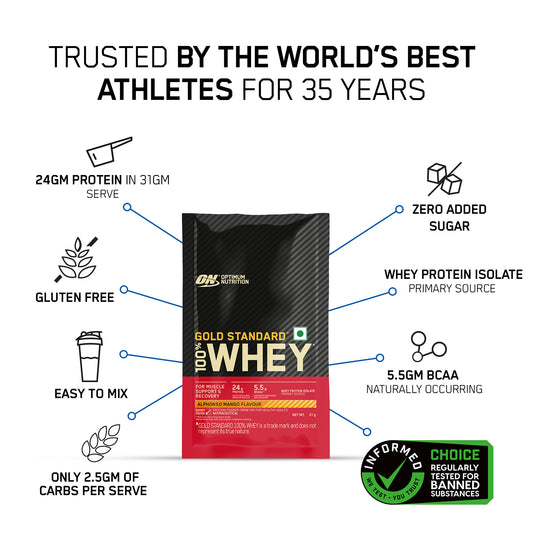
Optimum Nutrition Gold Standard 100% Whey - Alphonso Mango - Pack of 5 single serve sachets
Regular price ₹ 939Regular priceMRP₹ 939Sale price ₹ 939Inclusive of all taxesUnit price per3 Flavours -
NEW
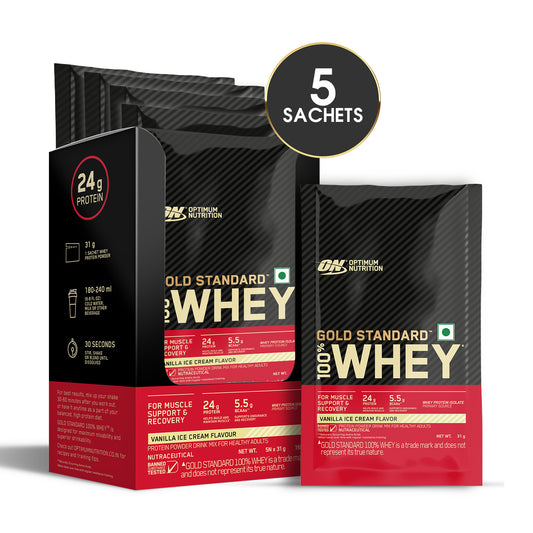
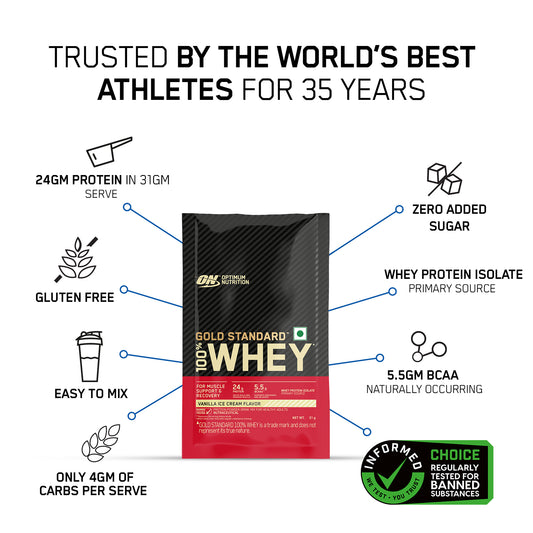
Optimum Nutrition Gold Standard 100% Whey - Vanilla Ice Cream - Pack of 5 single serve sachets
Regular price ₹ 999Regular priceMRP₹ 1,349Sale price ₹ 999 26% OFFInclusive of all taxesUnit price per3 FlavoursSale -

Gold Standard 100% Whey Protein Powder Double Rich Chocolate 5 lbs + Multivitamin for MEN- 60 Tablets + Zinc Magnesium Aspartate (ZMA) - 60 Capsules + Fish Oil - 60 Capsules
Regular price ₹ 11,729Regular priceMRP₹ 13,783Sale price ₹ 11,729 15% OFFInclusive of all taxesUnit price per1 FlavourSale -

Gold Standard 100% Whey Protein Powder Double Rich Chocolate 4 kg + Multivitamin for MEN- 60 Tablets + Zinc Magnesium Aspartate (ZMA) - 60 Capsules + Fish Oil - 60 Capsules
Regular price ₹ 18,569Regular priceMRP₹ 21,383Sale price ₹ 18,569 13% OFFInclusive of all taxesUnit price per1 FlavourSale -

Gold Standard 100% Whey | 2 lbs | Double Rich Chocolate + Creatine 250 g
Regular price ₹ 5,149Regular priceMRP₹ 6,558Sale price ₹ 5,149 21% OFFInclusive of all taxesUnit price per1 FlavourSale -


Performance Whey Protein Powder 0.5Kg (Chocolate Milkshake)
Regular price ₹ 1,999Regular priceMRP₹ 2,149Sale price ₹ 1,999 7% OFFInclusive of all taxesUnit price per1 FlavourSale -

Gold Standard 100% Whey Protein Powder | Double Rich Chocolate | 2 lbs + Fish Oil - 60 Capsules
Regular price ₹ 4,949Regular priceMRP₹ 5,745Sale price ₹ 4,949 14% OFFInclusive of all taxesUnit price per1 FlavourSale -

Optimum Nutrition (ON) Gold Standard Pre-Workout- 142.5g/15 single serve packs (Green Apple Flavor), For Energy, Focus, Power, Endurance & Performance and Gold Standard 100% Whey Protein Powder | Double Rich Chocolate | 2 lbs
Regular price ₹ 4,809Regular priceMRP₹ 6,008Sale price ₹ 4,809 20% OFFInclusive of all taxesUnit price per1 FlavourSale -


Performance Whey Protein Powder 1Kg (Chocolate Milkshake) + Multivitamin for MEN- 60 Tablets
Regular price ₹ 3,849Regular priceMRP₹ 6,088Sale price ₹ 3,849 37% OFFInclusive of all taxesUnit price per1 FlavourSale -


Performance Whey 1 kg - Pack of 2
Regular price ₹ 6,789Regular priceMRP₹ 10,498Sale price ₹ 6,789 35% OFFInclusive of all taxesUnit price per1 FlavourSale -

Gold Standard 100% Whey - Vanilla Ice Cream - Pack of 5 + Gold Standard 100% Whey - Alphonso Mango - Pack of 5
Regular price ₹ 1,881Regular priceMRP₹ 2,019Sale price ₹ 1,881 7% OFFInclusive of all taxesUnit price per1 FlavourSale -

Gold Standard 100% Whey | 2 lbs | Double Rich Chocolate + Multivitamin for MEN- 60 Tablets + Zinc Magnesium Aspartate (ZMA) - 60 Capsules + Fish Oil - 60 Capsules
Regular price ₹ 6,079Regular priceMRP₹ 7,533Sale price ₹ 6,079 19% OFFInclusive of all taxesUnit price per1 FlavourSale -

Gold Standard 100% Whey Protein | 907 g (2 lbs) | Double Rich Chocolate + Micronized Creatine Powder - 100g, Citrus Orange
Regular price ₹ 4,949Regular priceMRP₹ 5,768Sale price ₹ 4,949 14% OFFInclusive of all taxesUnit price per1 FlavourSale -

Gold Standard 100% Whey Protein | 907 g (2 lbs) | Double Rich Chocolate + Micronized Creatine Powder - 250g, Citrus Orange
Regular price ₹ 5,149Regular priceMRP₹ 6,118Sale price ₹ 5,149 16% OFFInclusive of all taxesUnit price per1 FlavourSale -

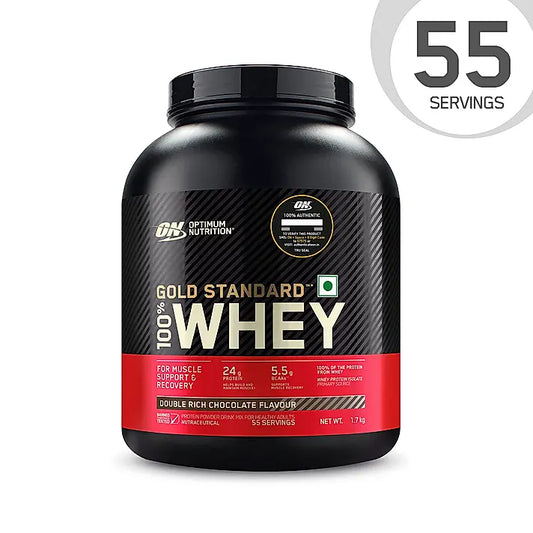
Gold Standard 100% Whey Protein Powder Double Rich Chocolate 1.7 kg + Pre Workout Green Apple
Regular price ₹ 7,949Regular priceMRP₹ 11,978Sale price ₹ 7,949 34% OFFInclusive of all taxesUnit price per1 FlavourSale -
FREE CREATINE

FREE Creatine 100g with Gold Standard 100% Whey Double Rich Chocolate - Pack of 2
Regular price ₹ 9,349Regular priceMRP₹ 10,158Sale price ₹ 9,349 8% OFFInclusive of all taxesUnit price per1 FlavourSale -
NEW

Gold Standard 100% Whey Protein | 907 g (2 lbs) | Double Rich Chocolate + Opti-Lock Shaker 600 mL
Regular price ₹ 6,228Regular priceMRP₹ 7,078Sale price ₹ 6,228 12% OFFInclusive of all taxesUnit price per1 FlavourSale -
NEW

Gold Standard 100% Whey Protein | 907 g (2 lbs) | Double Rich Chocolate + Creatine 250g + Opti-Lock Shaker 600 mL
Regular price ₹ 7,027Regular priceMRP₹ 8,557Sale price ₹ 7,027 18% OFFInclusive of all taxesUnit price per1 FlavourSale -

Gold Standard 100% Whey Protein Powder Vanilla Ice Cream 4 kg and Micronized Creatine Powder Unflavoured 250 g
Regular price ₹ 17,899Regular priceMRP₹ 20,408Sale price ₹ 17,899 12% OFFInclusive of all taxesUnit price per1 FlavourSale -


Performance Whey Protein | 1 kg (2.2 lbs) | Chocolate + Micronized Creatine Powder | Unflavoured | 100 g
Regular price ₹ 3,779Regular priceMRP₹ 5,938Sale price ₹ 3,779 36% OFFInclusive of all taxesUnit price per1 FlavourSale -

Gold Standard 100% Whey Protein Powder Double Rich Chocolate 4 kg and Micronised Creatine Powder Unflavoured 250 g
Regular price ₹ 17,899Regular priceMRP₹ 20,408Sale price ₹ 17,899 12% OFFInclusive of all taxesUnit price per1 FlavourSale -

Gold Standard 100% Whey 2 Lbs Double Rich Chocolate + Creatine 100 g
Regular price ₹ 4,949Regular priceMRP₹ 5,768Sale price ₹ 4,949 14% OFFInclusive of all taxesUnit price per1 FlavourSale -

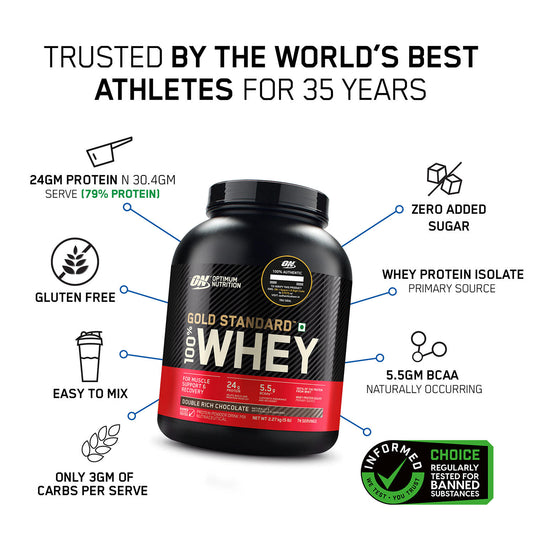
Gold Standard 100% Whey Protein Powder Vanilla Ice Cream 5 lbs and Micronised Creatine Powder Unflavoured 250 g
Regular price ₹ 10,849Regular priceMRP₹ 12,808Sale price ₹ 10,849 15% OFFInclusive of all taxesUnit price per1 FlavourSale -

Gold Standard 100% Whey Protein Powder Double Rich Chocolate 5 lbs and Micronised Creatine Powder Unflavoured 250 g
Regular price ₹ 10,849Regular priceMRP₹ 12,808Sale price ₹ 10,849 15% OFFInclusive of all taxesUnit price per1 FlavourSale -

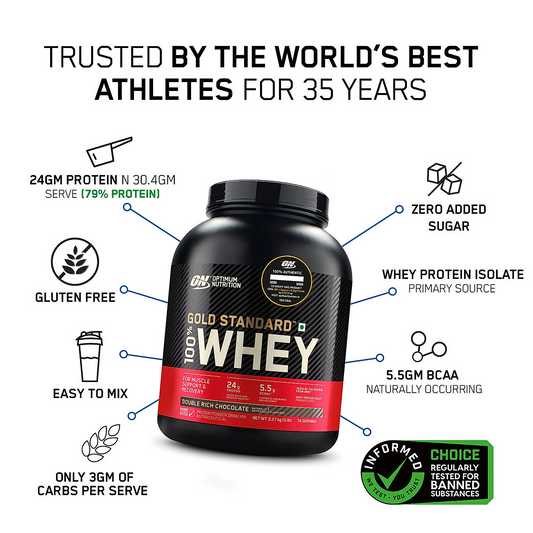
Gold Standard 100% Whey Protein Powder Double Rich Chocolate 1.7 kg and Micronised Creatine Powder Unflavoured 250 g
Regular price ₹ 8,349Regular priceMRP₹ 12,528Sale price ₹ 8,349 33% OFFInclusive of all taxesUnit price per1 FlavourSale -
NEW

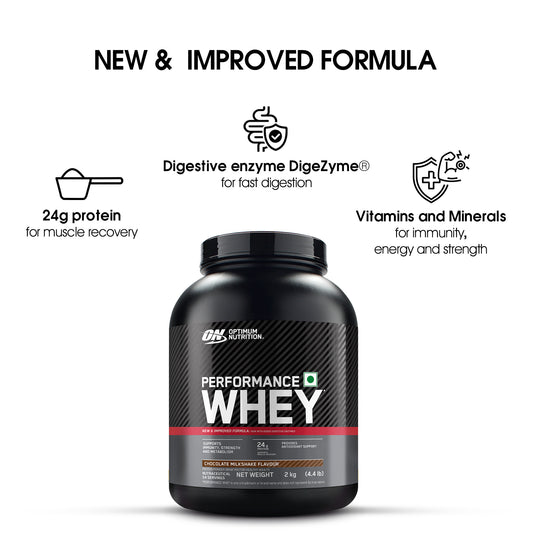
Optimum Nutrition (ON) Performance Whey Protein Powder, 24g Protein,2Kg (Chocolate Milkshake), Ultra-Filtered and Concentrated All-Whey Protein
Regular price ₹ 6,299Regular priceMRP₹ 6,759Sale price ₹ 6,299 7% OFFInclusive of all taxesUnit price per1 FlavourSold out


What Is Protein Powder and Why Does It Matter?
Protein is essential for muscle repair, recovery, and several important body functions. During exercise, muscles undergo microscopic wear and tear, and protein helps repair and rebuild them. This is why many people consider whey the best protein powder for post-workout recovery due to its fast absorption and complete amino acid profile.
Beyond muscle growth, protein powder benefits include supporting satiety, preserving lean muscle during weight management, and contributing to overall metabolic health. Whether your goal is weight loss or weight gain, choosing the right product can help you consistently meet your nutritional needs.
While whole foods should remain the primary source, a quality protein supplement offers a practical way to bridge nutritional gaps. For individuals with sensitive digestion, choosing the most easily digestible protein powder can make supplementation more comfortable.
What are the Different Types of Protein Powder?
Whey Protein
Optimum Nutrition's Gold Standard 100% Whey combines whey isolate and concentrate to deliver fast-absorbing protein for muscle recovery and growth. It is widely recognised as one of the best protein powder options for post-workout nutrition.Plant Protein
Made from pea and rice protein, ON Gold Standard 100% Plant Protein provides all nine essential amino acids in a dairy-free formula. It is a great protein supplement for vegetarians and those looking for the best protein powder without bloating issues.How to Choose the Right Protein Powder for Your Goals?
For muscle gain and recovery, whey protein remains one of the most effective choices because of its rapid absorption and naturally high leucine content. If you're comparing whey concentrate with isolate, the latter provides a higher protein percentage with lower fat and lactose, making it suitable for lean muscle development and those with mild lactose sensitivity.
If you want to consume protein powder for weight loss, opt for a low-calorie, high-protein formula such as whey isolate or a quality plant-based protein. These help preserve lean muscle while supporting calorie-controlled diets. On the other hand, individuals looking for protein powder for weight gain may benefit from protein powders paired with a calorie surplus and balanced nutrition.
Digestive comfort is equally important. Consider the best protein powder without bloating issues, such as whey isolate or hydrolysed protein. They are often regarded as the most easily digestible protein powder options.
Ultimately, the right protein supplement is one that aligns with your goals, dietary needs, and lifestyle while helping you consistently meet your daily protein intake.
How to Consume Protein Powder for Maximum Benefits?
However, not many people know how much protein to take per day.
Protein requirement depends on your body weight and activity level. As a general guideline, healthy adults need about 0.8 g of protein per kg of body weight daily, while active individuals and regular gym-goers may benefit from 1.2 to 2.2 g/kg/day.
- Women: Most active women require around 60-100 g of protein per day.
- Men: Most active men generally require around 80–140 g of protein per day.
Safety Standards and Authenticity of Optimum Nutrition Protein Products
To help consumers receive authentic products, Optimum Nutrition uses secure packaging, authentication labels, and authorised distribution channels. Purchasing from trusted retailers helps ensure you receive genuine products that meet the brand's quality standards.
Using authentic supplements not only improves confidence in product quality but also supports better long-term health outcomes. If you want the best protein supplement in India without side effects, always choose genuine products from reputable brands and use them as part of a balanced diet and healthy lifestyle.
FAQs
How much protein powder should I take per day?
The amount depends on your body weight, activity level, and goals. General guidelines suggest understanding taking protein based on your needs, typically ranging from moderate intake for general fitness to higher intake for muscle building. Protein powder should supplement, not replace, whole food sources.
When is the best time to take protein powder?
Protein can be consumed at any time of the day. Post-workout is the most common timing due to faster muscle recovery, but it can also be taken in the morning or between meals to maintain consistent protein intake.
Can beginners use protein powder even without intense workouts?
Yes, beginners can use protein powder to meet daily protein needs. Even without intense workouts, protein supports muscle maintenance, metabolism, and overall health.
Are Optimum Nutrition protein powders suitable for vegetarians?
Most whey-based products are suitable for vegetarians as they are derived from milk. Plant-based options are also available for those who prefer non-dairy alternatives.
Is it safe to mix protein powder with hot liquids?
Protein powder can be mixed with warm liquids, but extremely high temperatures may affect its texture and slightly alter its structure. It is best to mix with lukewarm or cold liquids for optimal results.
Can protein powder cause digestive issues or skin issues?
Some individuals may experience mild digestive discomfort due to lactose or certain ingredients. Choosing whey isolate or plant-based protein can help reduce such issues. Skin effects are rare and usually linked to individual sensitivities.
Can protein powder replace whole-food protein?
No. Protein powder should complement, not replace, whole foods. Whole foods provide additional nutrients like fibre, vitamins, and minerals that are essential for overall health, while protein powder offers convenience and targeted supplementation.
Blog article


