
-
FREE GIFT

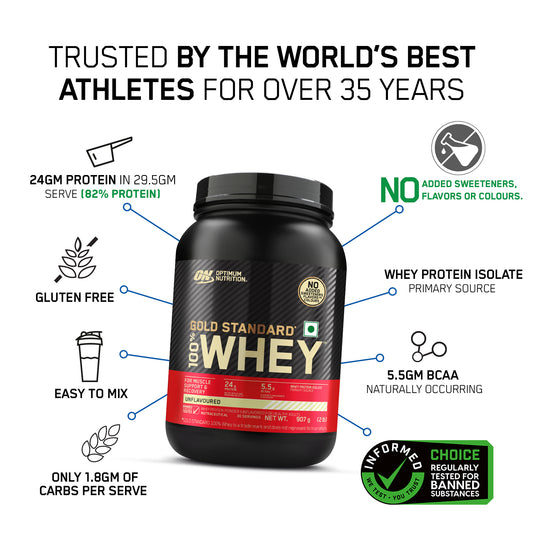
Unflavoured Optimum Nutrition (ON) Gold Standard 100% Whey Protein Powder - 2 lb, 907 g
Regular price ₹ 4,449Regular price MRP₹ 4,999Sale price ₹ 4,449 11% OFFInclusive of all taxesUnit price per4 FlavoursSale -
FREE GIFT
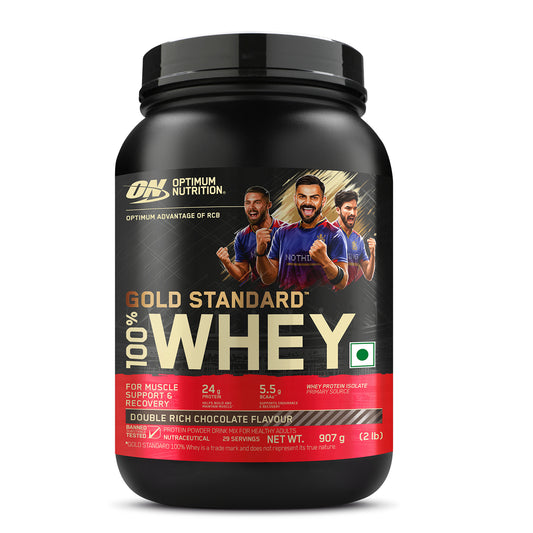
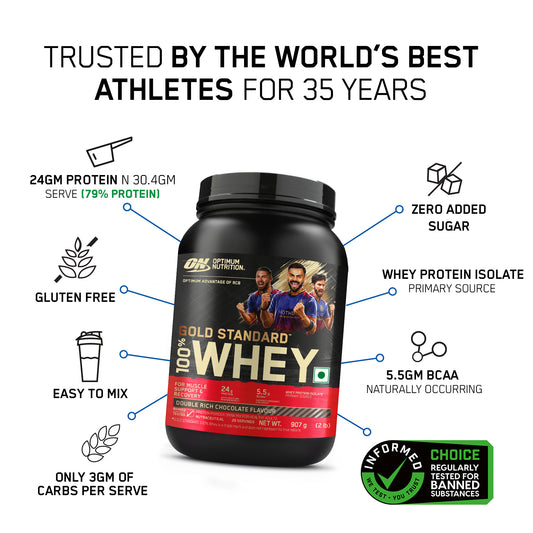
Gold Standard 100% Whey Protein | 907 g (2 lbs) | Double Rich Chocolate
Regular price ₹ 3,949Regular price MRP₹ 4,429Sale price ₹ 3,949 11% OFFInclusive of all taxesUnit price per4 FlavoursSale -
FREE GIFT
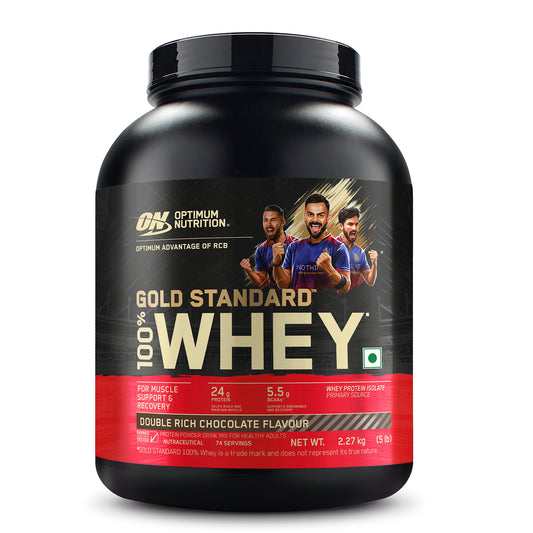
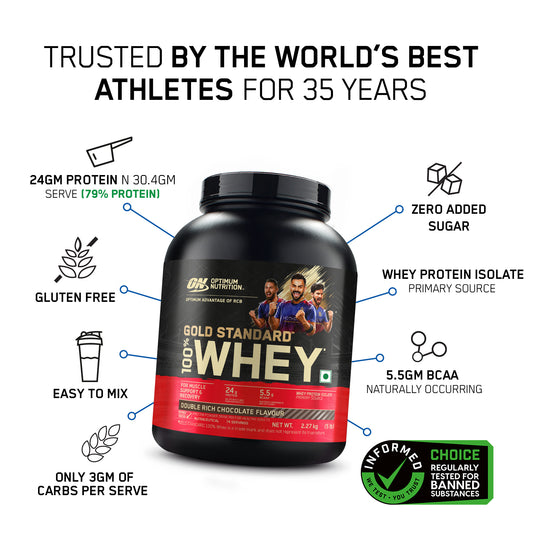
Gold Standard 100% Whey Protein Powder | Double Rich Chocolate | 5 lbs
Regular price ₹ 8,999Regular price MRP₹ 9,849Sale price ₹ 8,999 9% OFFInclusive of all taxesUnit price per3 FlavoursSale -

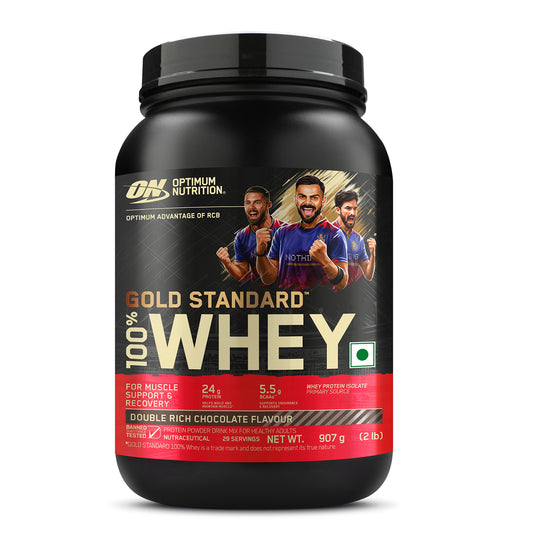
Gold Standard 100% Whey 2 Lbs Double Rich Chocolate + Creatine 100 g
Regular price ₹ 4,259Regular price MRP₹ 5,048Sale price ₹ 4,259 16% OFFInclusive of all taxesUnit price per1 FlavourSale -


Gold Standard 100% Whey Protein Powder | Double Rich Chocolate | 1 lbs
Regular price ₹ 2,149Regular price MRP₹ 2,389Sale price ₹ 2,149 10% OFFInclusive of all taxesUnit price per2 FlavoursSale -
FREE GIFT


Gold Standard 100% Whey Protein Powder | Double Rich Chocolate | 4 kg
Regular price ₹ 14,999Regular price MRP₹ 16,459Sale price ₹ 14,999 9% OFFInclusive of all taxesUnit price per2 FlavoursSale -

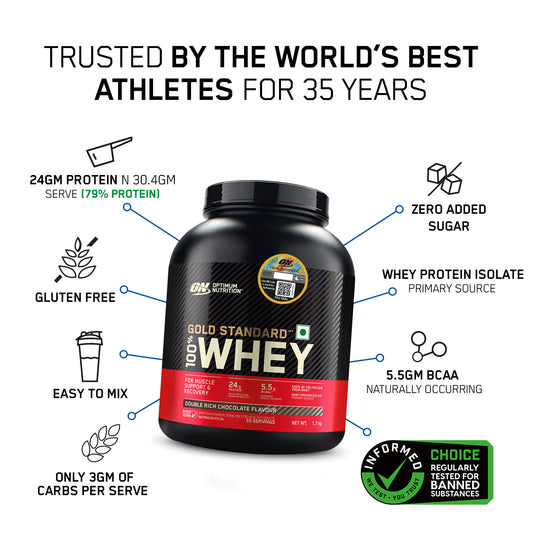
Gold Standard 100% Whey Protein Powder | Double Rich Chocolate | 1.7 kg
Regular price ₹ 6,799Regular price MRP₹ 7,649Sale price ₹ 6,799 11% OFFInclusive of all taxesUnit price per1 FlavourSale -
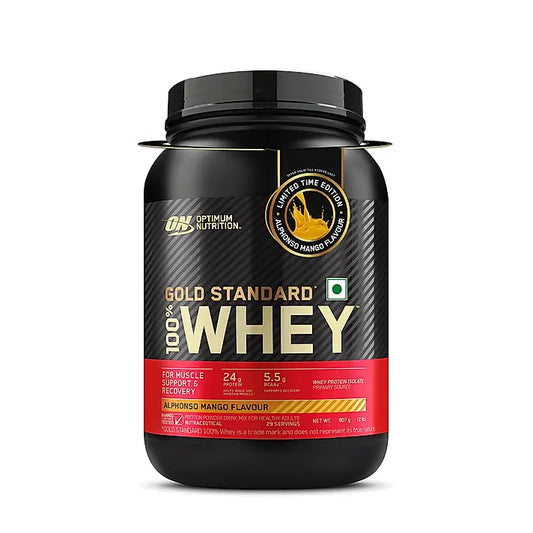
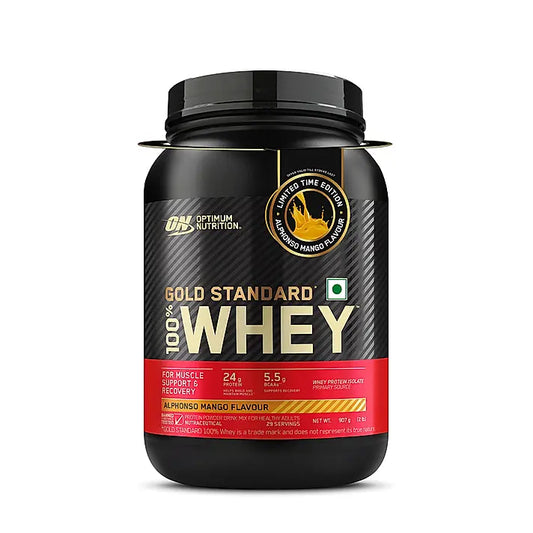
Limited Edition Optimum Nutrition (ON) Gold Standard 100% Whey Protein Powder 2 lb, 907g (Alphonso Mango)
Regular price ₹ 4,129Regular price MRP₹ 4,429Sale price ₹ 4,129 7% OFFInclusive of all taxesUnit price per3 FlavoursSale -

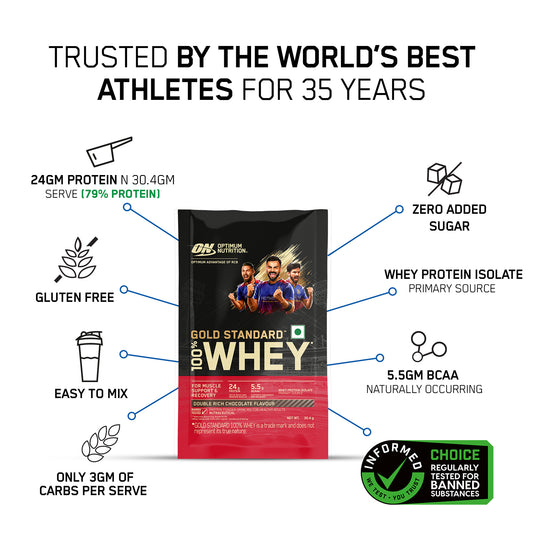
Gold Standard 100% Whey Protein Powder | Double Rich Chocolate | 152 g
Regular price ₹ 839Regular price MRP₹ 940Sale price ₹ 839 11% OFFInclusive of all taxesUnit price per3 FlavoursSale -
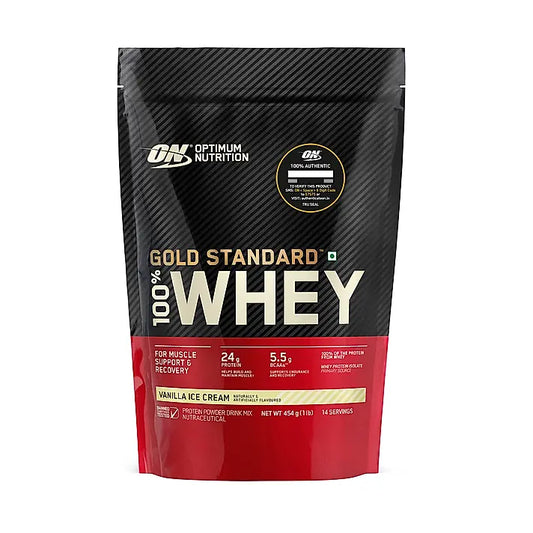
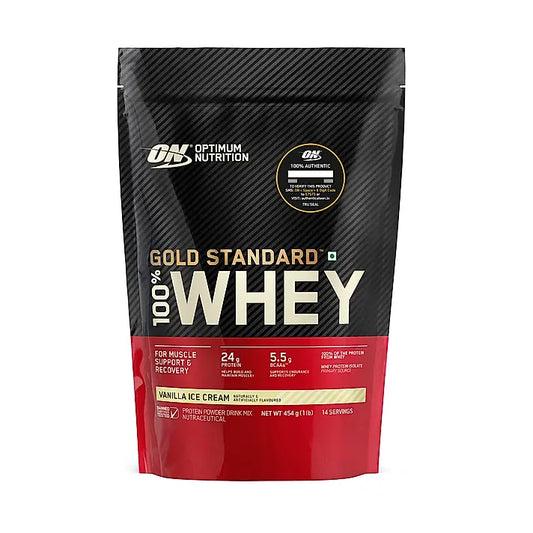
Gold Standard 100% Whey Protein Powder | Vanilla Ice Cream | 1 lbs
Regular price ₹ 2,149Regular price MRP₹ 2,389Sale price ₹ 2,149 10% OFFInclusive of all taxesUnit price per2 FlavoursSale -

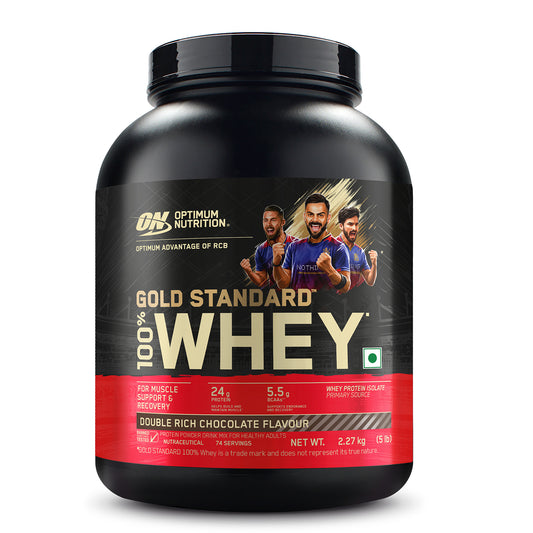
Gold Standard 100% Whey 5 Lbs Double Rich Chocolate + Pre Workout Green Apple
Regular price ₹ 9,139Regular price MRP₹ 10,558Sale price ₹ 9,139 13% OFFInclusive of all taxesUnit price per1 FlavourSale -
NEW


Performance Whey Protein Powder 1Kg (Chocolate Milkshake)
Regular price ₹ 2,949Regular price MRP₹ 3,109Sale price ₹ 2,949 5% OFFInclusive of all taxesUnit price per1 FlavourSale -

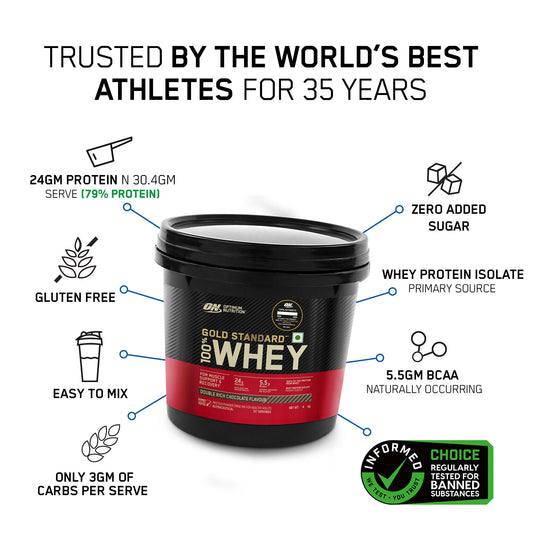
Gold Standard 100% Whey 4 KG Double Rich Chocolate + Pre Workout Green Apple
Regular price ₹ 15,149Regular price MRP₹ 17,168Sale price ₹ 15,149 12% OFFInclusive of all taxesUnit price per1 FlavourSale -


Shake The Whey Gift Box: Gold Standard 100% Whey Double Rich Chocolate 2 lbs + Steel Shaker
Regular price ₹ 4,699Regular price MRP₹ 5,093Sale price ₹ 4,699 8% OFFInclusive of all taxesUnit price per1 FlavourSale -

Gold Standard 100% Whey Protein Powder | Double Rich Chocolate | 2 lbs + Multivitamin for MEN- 60 Tablets
Regular price ₹ 4,359Regular price MRP₹ 5,268Sale price ₹ 4,359 17% OFFInclusive of all taxesUnit price per1 FlavourSale -

Gold Standard 100% Whey Protein Powder Double Rich Chocolate 5 lbs + Multivitamin for MEN- 60 Tablets + Zinc Magnesium Aspartate (ZMA) - 60 Capsules + Fish Oil - 60 Capsules
Regular price ₹ 10,129Regular price MRP₹ 12,303Sale price ₹ 10,129 18% OFFInclusive of all taxesUnit price per1 FlavourSale -

Gold Standard 100% Whey Protein Powder Double Rich Chocolate 4 kg + Multivitamin for MEN- 60 Tablets + Zinc Magnesium Aspartate (ZMA) - 60 Capsules + Fish Oil - 60 Capsules
Regular price ₹ 16,169Regular price MRP₹ 18,913Sale price ₹ 16,169 15% OFFInclusive of all taxesUnit price per1 FlavourSale -

Optimum Nutrition (ON) Gold Standard Pre-Workout- 142.5g/15 single serve packs (Green Apple Flavor), For Energy, Focus, Power, Endurance & Performance and Gold Standard 100% Whey Protein Powder | Double Rich Chocolate | 2 lbs
Regular price ₹ 4,349Regular price MRP₹ 5,138Sale price ₹ 4,349 15% OFFInclusive of all taxesUnit price per1 FlavourSale -


Performance Whey Protein Powder 1Kg (Chocolate Milkshake) + Multivitamin for MEN- 60 Tablets
Regular price ₹ 3,459Regular price MRP₹ 3,948Sale price ₹ 3,459 12% OFFInclusive of all taxesUnit price per1 FlavourSale -
NEW

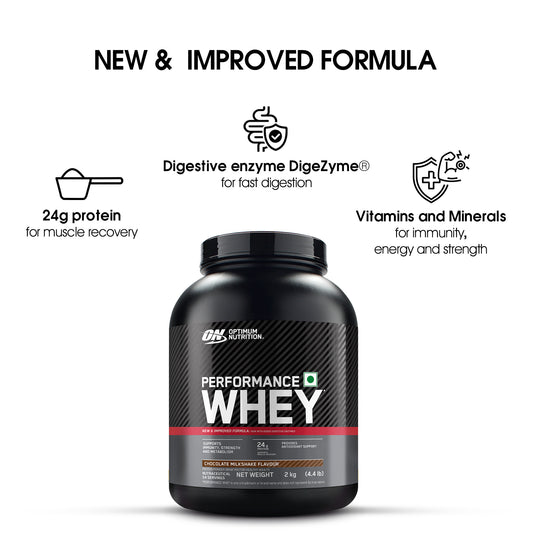
Optimum Nutrition (ON) Performance Whey Protein Powder, 24g Protein,2Kg (Chocolate Milkshake), Ultra-Filtered and Concentrated All-Whey Protein
Regular price ₹ 5,779Regular price MRP₹ 6,759Sale price ₹ 5,779 14% OFFInclusive of all taxesUnit price per1 FlavourSale -

Gold Standard 100% Whey Protein Powder | Double Rich Chocolate | 2 lbs + Fish Oil - 60 Capsules
Regular price ₹ 4,259Regular price MRP₹ 5,095Sale price ₹ 4,259 16% OFFInclusive of all taxesUnit price per1 FlavourSale -


Muscle Gain Gift Box: Gold Standard 100% Whey Double Rich Chocolate 2 lbs + Creatine 100g + Steel Shaker
Regular price ₹ 5,199Regular price MRP₹ 5,792Sale price ₹ 5,199 10% OFFInclusive of all taxesUnit price per1 FlavourSale -
NEW

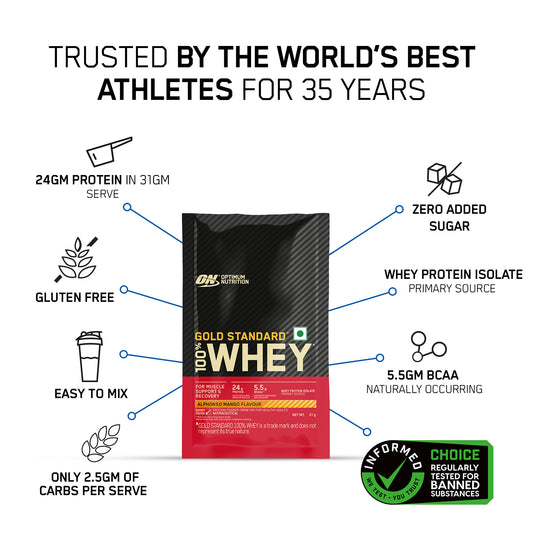
Optimum Nutrition Gold Standard 100% Whey - Alphonso Mango - Pack of 5 single serve sachets
Regular price ₹ 879Regular price MRP₹ 940Sale price ₹ 879 6% OFFInclusive of all taxesUnit price per3 FlavoursSale -


Performance Whey 1 kg - Pack of 2
Regular price ₹ 5,699Regular price MRP₹ 6,218Sale price ₹ 5,699 8% OFFInclusive of all taxesUnit price per1 FlavourSale -
NEW
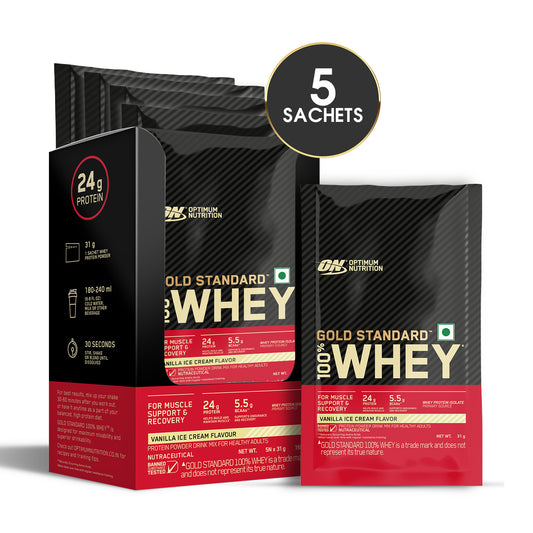
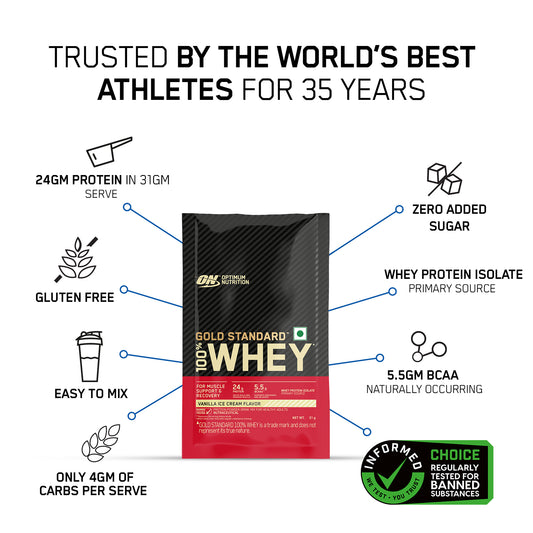
Optimum Nutrition Gold Standard 100% Whey - Vanilla Ice Cream - Pack of 5 single serve sachets
Regular price ₹ 839Regular price MRP₹ 940Sale price ₹ 839 11% OFFInclusive of all taxesUnit price per3 FlavoursSale -

Gold Standard 100% Whey Protein Powder | Double Rich Chocolate | 2 lbs + Zinc Magnesium Aspartate (ZMA) - 60 Capsules
Regular price ₹ 4,459Regular price MRP₹ 5,378Sale price ₹ 4,459 17% OFFInclusive of all taxesUnit price per1 FlavourSale -


Performance Whey Protein Powder 0.5Kg (Chocolate Milkshake)
Regular price ₹ 1,599Regular price MRP₹ 1,599Sale price ₹ 1,599Inclusive of all taxesUnit price per1 Flavour -

Gold Standard 100% Whey | 2 lbs | Double Rich Chocolate + Multivitamin for MEN- 60 Tablets + Zinc Magnesium Aspartate (ZMA) - 60 Capsules + Fish Oil - 60 Capsules
Regular price ₹ 5,429Regular price MRP₹ 6,883Sale price ₹ 5,429 21% OFFInclusive of all taxesUnit price per1 FlavourSale -

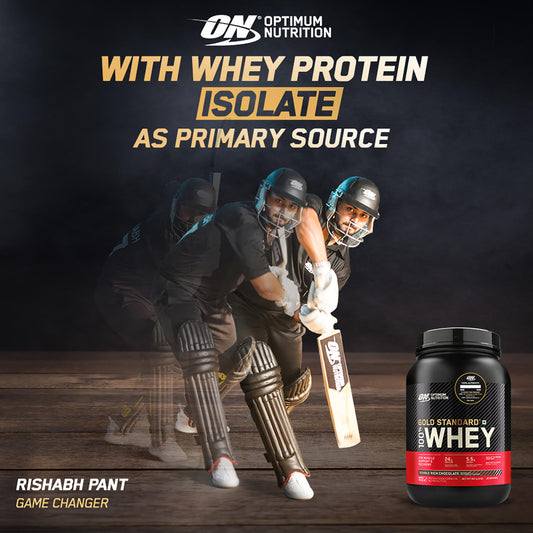
Gold Standard 100% Whey Protein Powder Vanilla Ice Cream 4 kg and Micronized Creatine Powder Unflavoured 250 g
Regular price ₹ 15,359Regular price MRP₹ 17,498Sale price ₹ 15,359 12% OFFInclusive of all taxesUnit price per1 FlavourSale -


Performance Whey Protein | 1 kg (2.2 lbs) | Chocolate + Micronized Creatine Powder | Unflavoured | 100 g
Regular price ₹ 3,339Regular price MRP₹ 3,728Sale price ₹ 3,339 10% OFFInclusive of all taxesUnit price per1 FlavourSale -

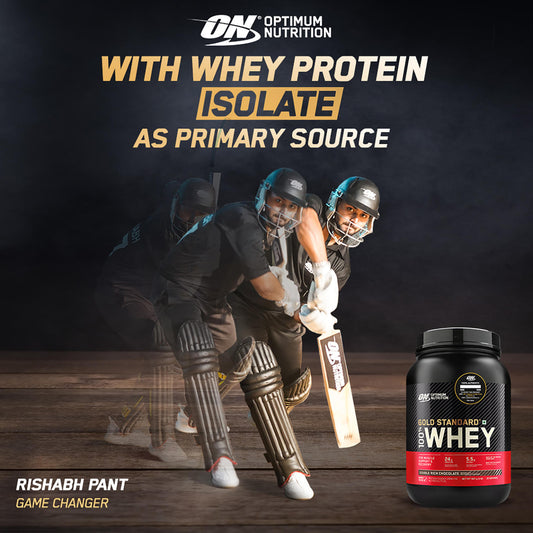
Gold Standard 100% Whey Protein Powder Double Rich Chocolate 4 kg and Micronised Creatine Powder Unflavoured 250 g
Regular price ₹ 15,359Regular price MRP₹ 17,498Sale price ₹ 15,359 12% OFFInclusive of all taxesUnit price per1 FlavourSale -

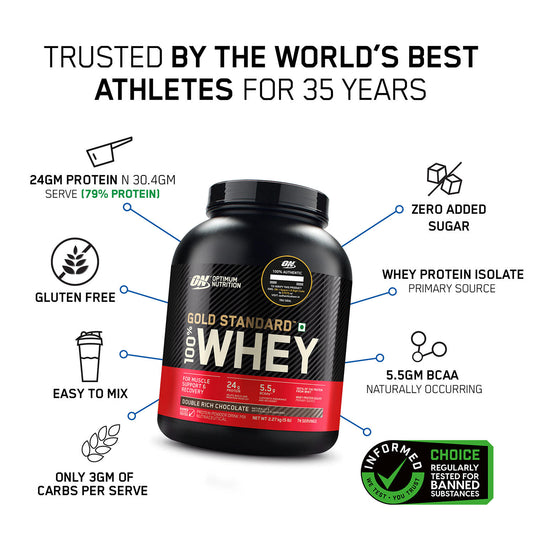
Gold Standard 100% Whey Protein Powder Vanilla Ice Cream 5 lbs and Micronised Creatine Powder Unflavoured 250 g
Regular price ₹ 9,369Regular price MRP₹ 10,888Sale price ₹ 9,369 14% OFFInclusive of all taxesUnit price per1 FlavourSale -

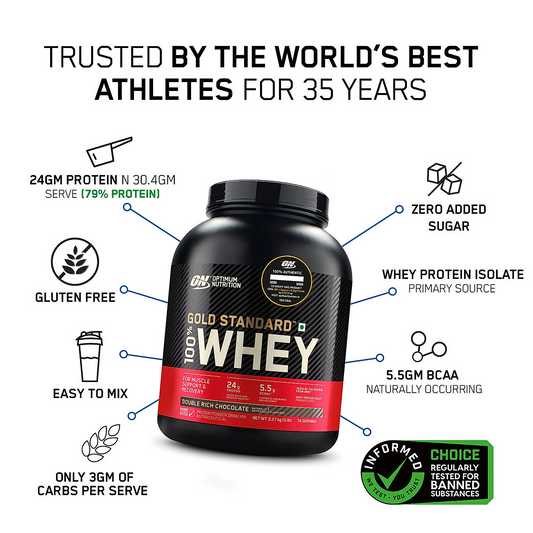
Gold Standard 100% Whey Protein Powder Double Rich Chocolate 1.7 kg and Micronised Creatine Powder Unflavoured 250 g
Regular price ₹ 7,299Regular price MRP₹ 8,688Sale price ₹ 7,299 16% OFFInclusive of all taxesUnit price per1 FlavourSale -

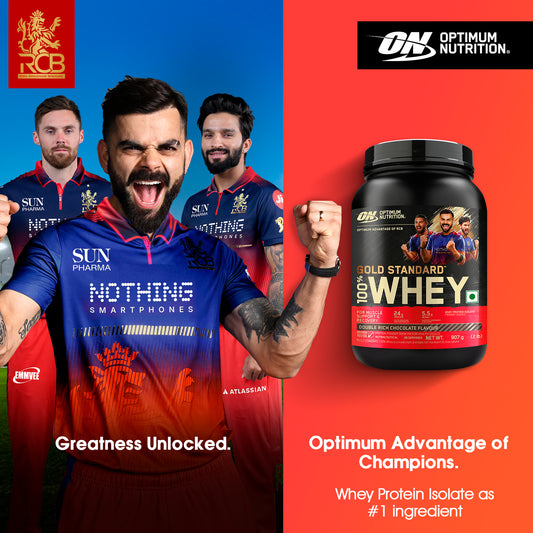
Gold Standard 100% Whey | 2 lbs | Double Rich Chocolate + Creatine 250 g
Regular price ₹ 4,599Regular price MRP₹ 5,468Sale price ₹ 4,599 16% OFFInclusive of all taxesUnit price per1 FlavourSale -
NEW

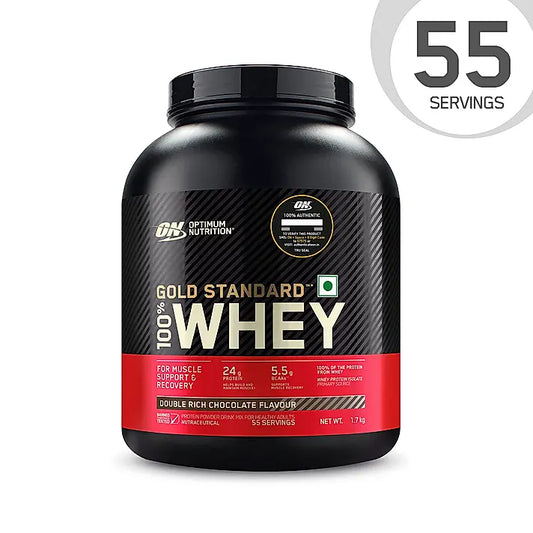
Gold Standard 100% Whey Protein Powder Double Rich Chocolate 1.7 kg + Multivitamin for MEN- 60 Tablets + Zinc Magnesium Aspartate (ZMA) - 60 Capsules + Fish Oil - 60 Capsules
Regular price ₹ 8,139Regular price MRP₹ 10,103Sale price ₹ 8,139 19% OFFInclusive of all taxesUnit price per1 FlavourSale -

Gold Standard 100% Whey Protein Powder Double Rich Chocolate 1.7 kg + Pre Workout Green Apple
Regular price ₹ 7,049Regular price MRP₹ 8,358Sale price ₹ 7,049 16% OFFInclusive of all taxesUnit price per1 FlavourSale


What is Whey Protein and How is it made?
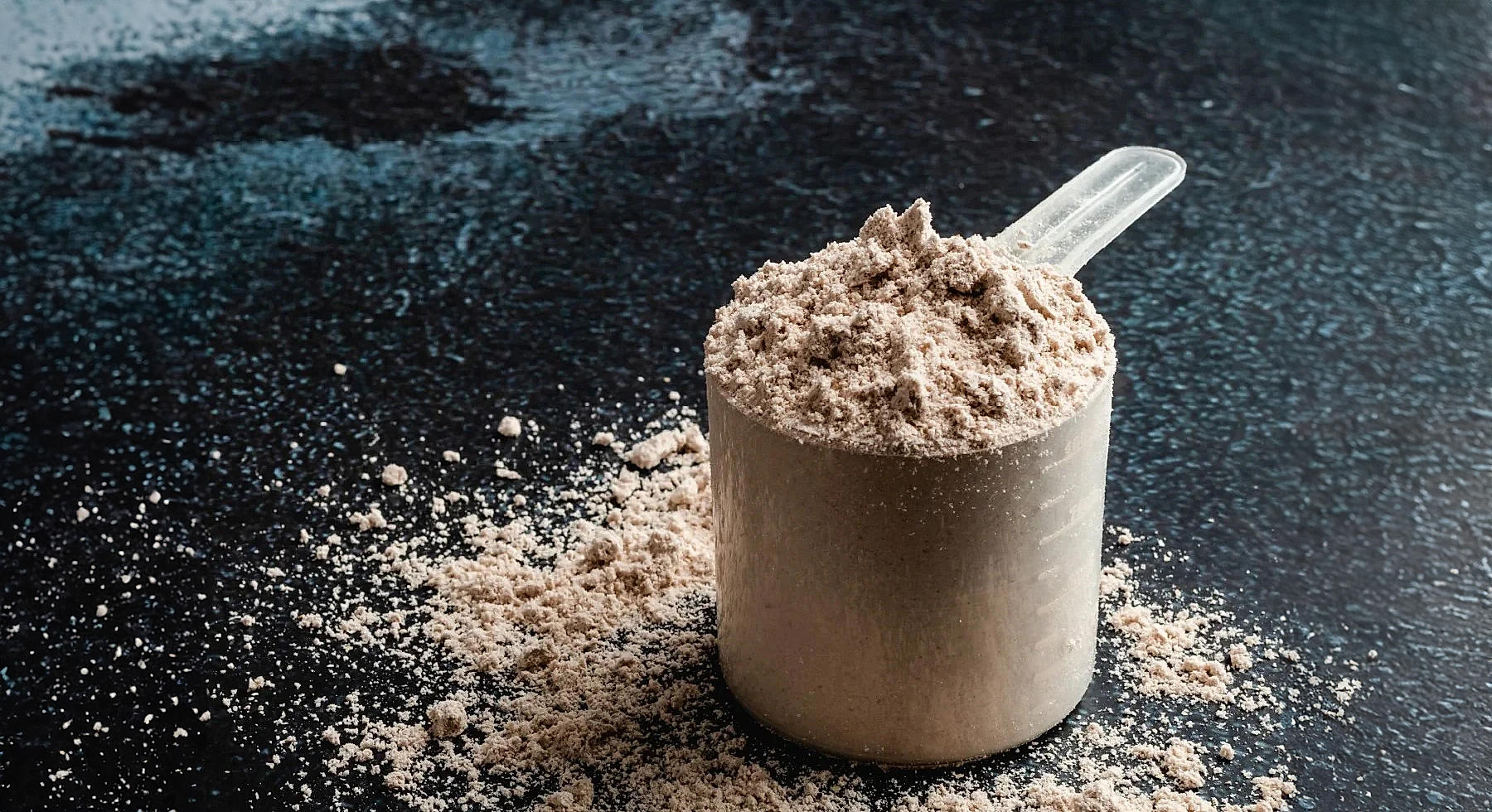
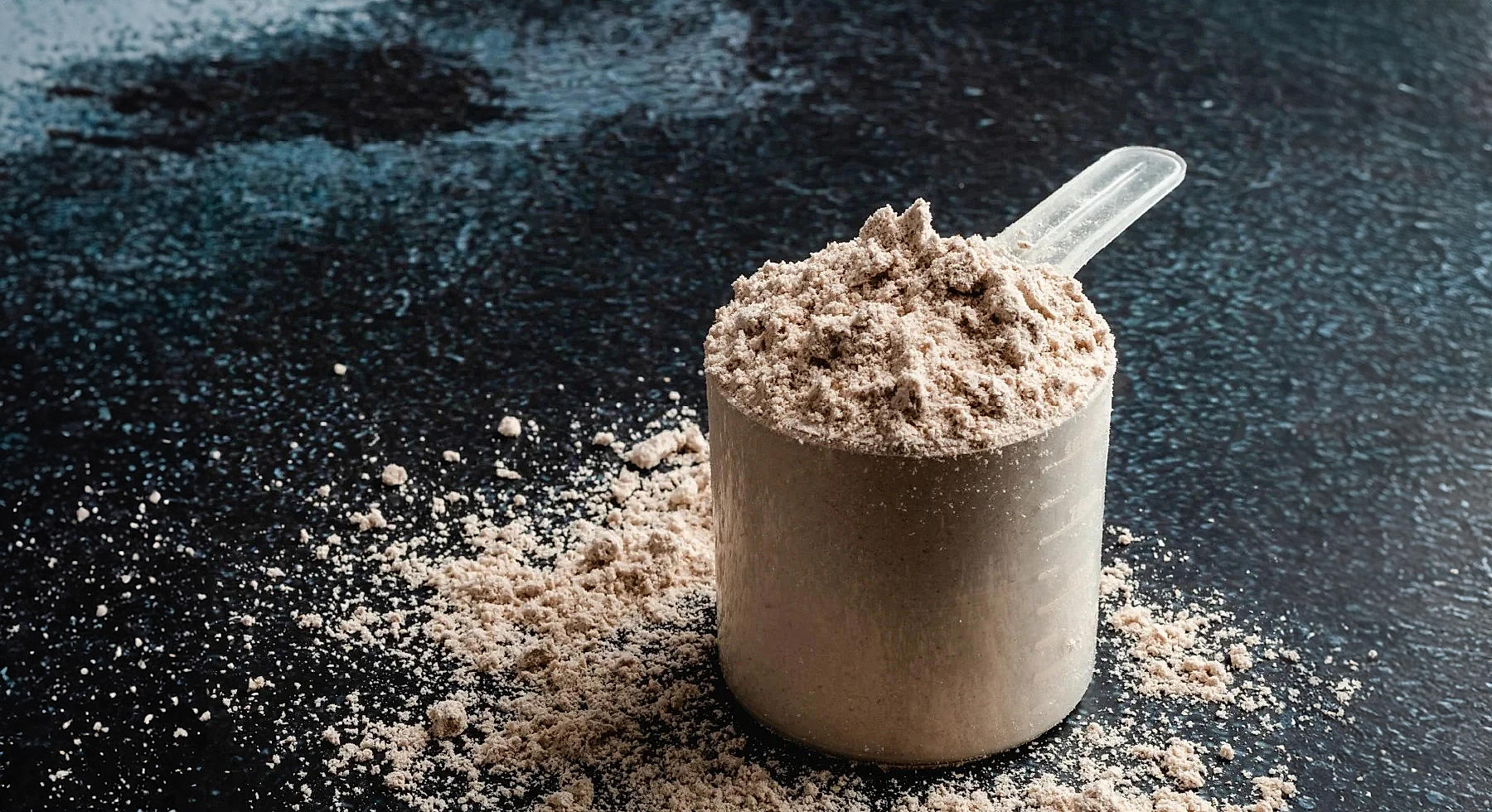
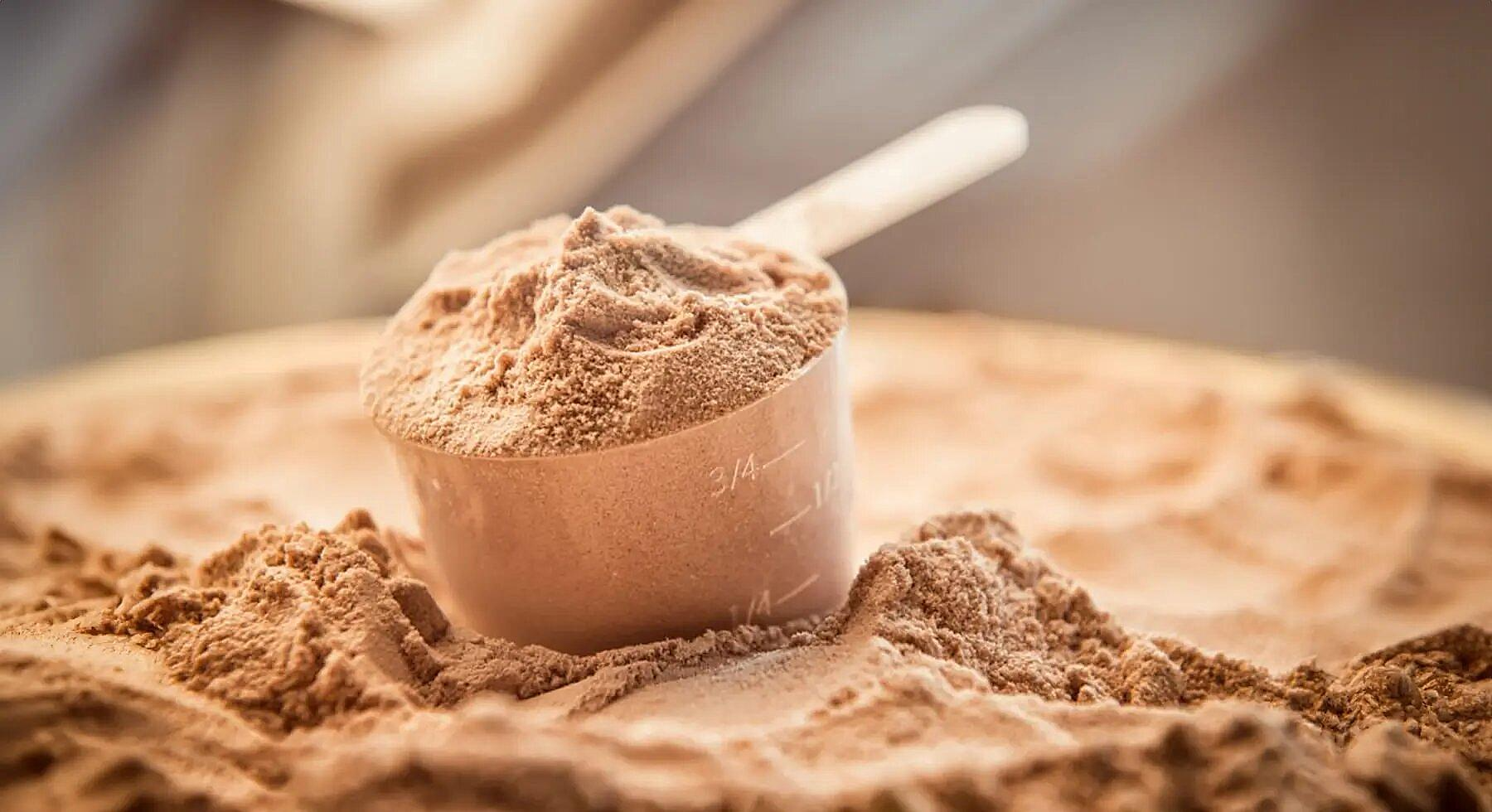
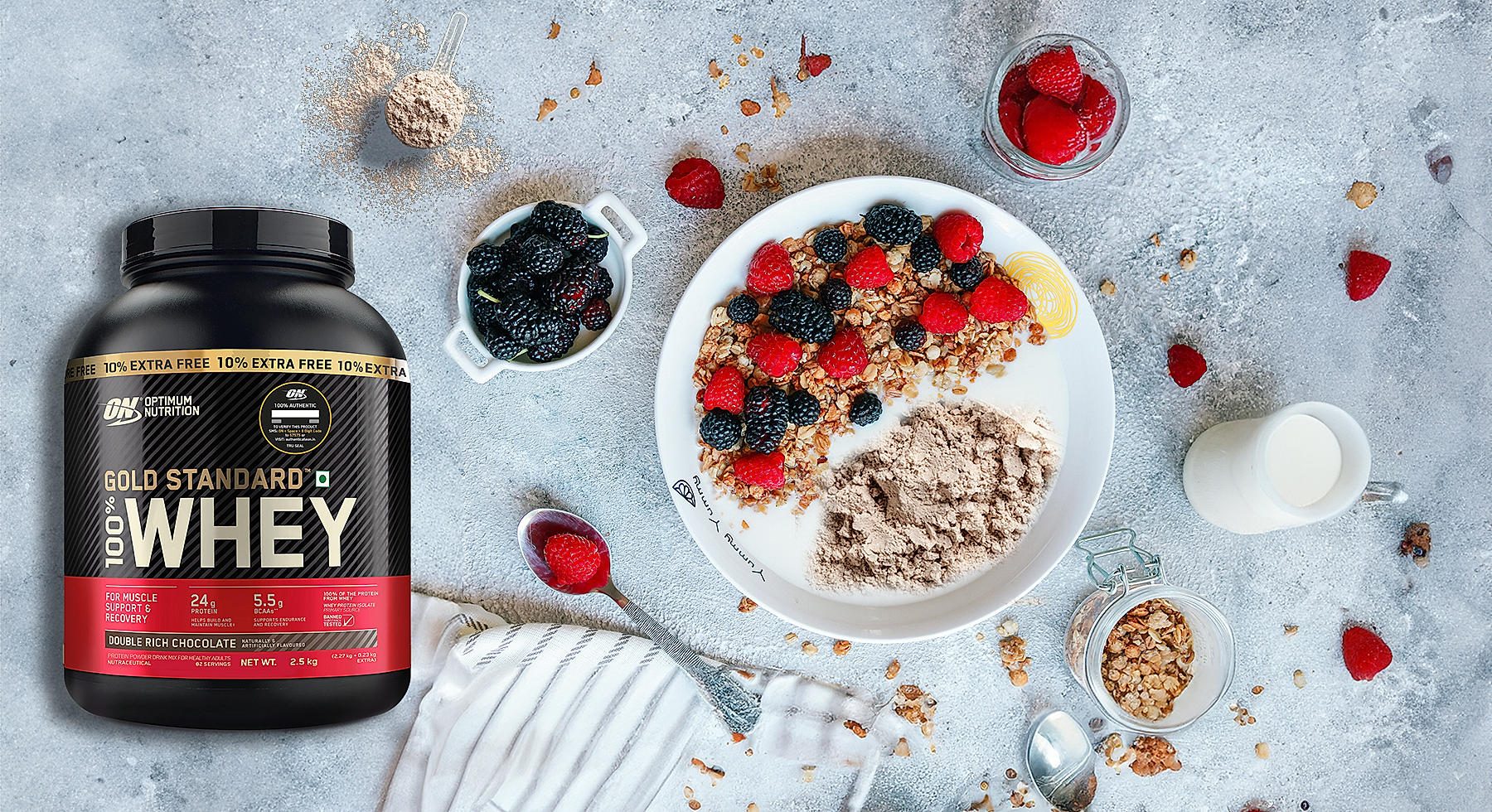
It is a high-quality protein made from milk during the cheese-making process. Milk separates into solid curds and liquid whey when curdled. This liquid is then filtered, processed, and dried to create whey protein powder, one of the most widely used supplements in fitness and nutrition. The reason whey protein is so popular lies in its complete amino acid profile. It contains all essential amino acids, including branched-chain amino acids (BCAAs), which play a key role in muscle recovery and growth. Its fast absorption rate makes it especially effective post-workout, when the body needs immediate nutrients. Modern processing techniques further refine whey into different forms, such as isolate whey protein and concentrate whey protein, each offering unique benefits. From muscle building to general wellness, the wide range of whey protein benefits makes it suitable for beginners and athletes alike.
Understanding Whey Protein Labels: Isolate, Concentrate, and Blends
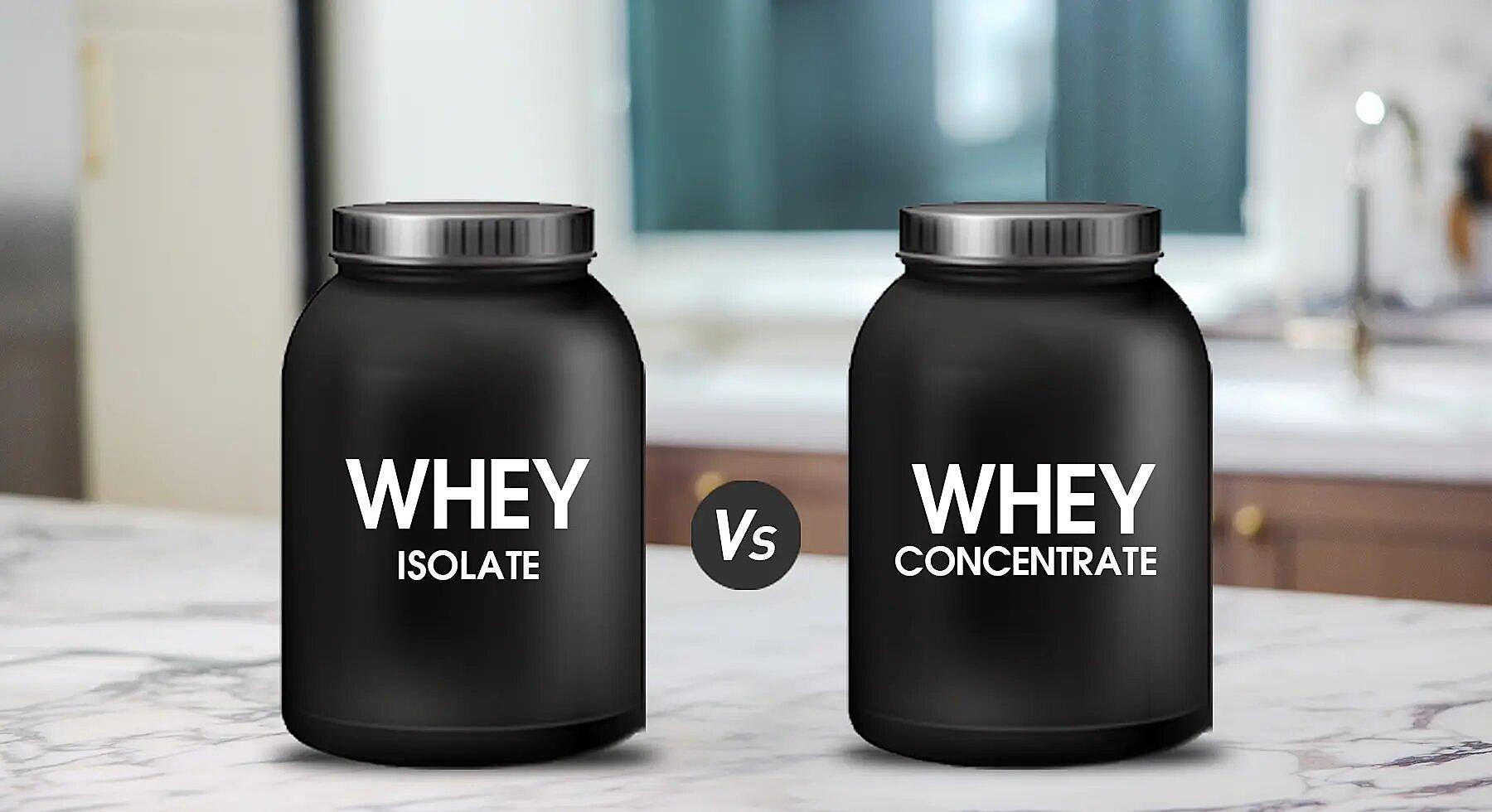
Reading a whey protein label can be confusing without understanding the different types available. The most common forms are concentrate, isolate, and blends.
Concentrate whey protein
It is the least processed form, typically containing 70–80% protein along with small amounts of fats and carbohydrates. It retains more natural nutrients and is often more affordable, making it a popular choice for general fitness.
Isolate whey protein
It undergoes additional filtration to remove most fats and lactose, resulting in a higher protein content (usually 90% or more). This makes it ideal for those looking for lean muscle gain or those sensitive to lactose. Many people prefer isolate whey protein when searching for lactose-free whey options, although trace amounts may still be present.
Blends
These combine different forms of whey to balance cost, taste, and performance. They offer both fast and slightly sustained protein release, making them versatile for daily use. Understanding these differences helps in selecting the best whey protein based on your fitness goals, digestion, and budget.
How Whey Protein Fits into Different Training Styles and Diets
Strength training
For individuals focused on muscle building and strength, whey protein supports muscle repair and growth after resistance workouts. The fast-digesting nature of whey protein powder ensures that amino acids are quickly delivered to muscles, promoting recovery and improving performance over time.
Endurance workouts
Endurance athletes, such as runners or cyclists, benefit from whey protein for recovery and muscle preservation. Long-duration activities can lead to muscle breakdown, and protein intake helps repair tissues and reduce fatigue, allowing for consistent performance.
Fat-loss diets
Whey protein plays a key role in whey for fat loss strategies. It helps maintain lean muscle mass while reducing overall calorie intake. High-protein diets also improve satiety, making it easier to control hunger and stick to a calorie deficit. Choosing isolate whey protein can be beneficial here due to its lower fat and carbohydrate content.
High-protein vegetarian diets
For vegetarians who consume dairy, whey protein is an efficient way to meet daily protein requirements. It complements plant-based protein sources by providing a complete amino acid profile, which may be limited in vegetarian diets. This makes whey a valuable addition for balanced nutrition.
Common Mistakes People Make When Using Whey Protein
Whey protein is highly effective when used correctly, but certain common mistakes can limit its benefits or lead to unnecessary issues. Understanding these can help you make better use of your protein supplement.
Replacing whole foods
Whey protein should complement a balanced diet, not replace natural food sources.
Overconsumption
Taking more than your daily requirement does not improve results and is unnecessary.
Overthinking timing
Total daily protein intake matters more than exact timing, even though post-workout is ideal.
Wrong protein type
Those with lactose sensitivity should prefer isolate over concentrate whey protein.
Ignoring authenticity
Always choose trusted brands to ensure you’re getting the best whey protein
What to Check Before Buying Whey Protein in India?
When buying whey protein in India, ensuring quality and authenticity is essential due to the wide range of products available in the market. A careful check can help you avoid counterfeit or low-quality supplements.
Ingredient list and protein content
Always review the label to see the protein per serving and whether it includes isolate whey protein, concentrate whey protein, or a blend.
Certifications and quality standards
Look for products that mention third-party testing, certifications, and proper manufacturing practices to ensure safety and consistency.
Authenticity markers
Check packaging for holograms, QR codes, or tamper-proof seals. Buying from authorised sellers or official websites reduces the risk of fake products.
Price vs quality
Extremely low prices can indicate compromised quality. Investing in the best whey protein ensures better results and long-term safety.
FAQs
Why is whey protein preferred over other protein sources?
Whey protein is preferred because it is a complete protein with all essential amino acids and is rapidly absorbed by the body. Its versatility and proven whey protein benefits make it suitable for muscle recovery, weight management, and overall health.
Is whey protein fast or slow digesting?
Whey protein is a fast-digesting protein. It is quickly absorbed into the bloodstream, making it ideal for post-workout recovery when the body needs immediate nutrients.
Does whey protein contain lactose?
Yes, whey protein may contain lactose, especially in concentrate form. However, isolate whey protein contains very low levels of lactose and is often suitable for those looking for lactose-free whey options.
Can whey protein be taken on rest days?
Yes, whey protein can be consumed on rest days to help meet daily protein requirements and support ongoing muscle recovery.
Is whey protein suitable for fat-loss diets?
Yes, whey protein is effective for fat-loss diets. It supports lean muscle retention and helps control hunger, making it useful in whey for fat loss plans.
How long does whey protein take to show results?
Results depend on consistency, diet, and training. Most individuals start noticing improvements in recovery and strength within a few weeks of regular use.
Can whey protein be used without going to the gym?
Yes, whey protein can be used to meet daily protein needs even without gym workouts. It supports general health, muscle maintenance, and overall nutrition.
Is whey protein safe for long-term use?
Whey protein is generally safe for long-term use when consumed within recommended limits and as part of a balanced diet.
How do I know if a whey protein label is genuine?
Check for authentication markers such as QR codes, batch numbers, and official seals. Purchasing from authorised sellers and trusted brands ensures product authenticity.
Blog article